I’ve lived in the Bay Area for over 10 years now. Overall the weather here is great. I can bike to work every day between roughly May and October and not worry about getting rained on. Even in the winter, the “rainy season”, it only really rains occasionally and I can still bike to work most days. And I can keep running year round, nearly always in shorts, although in winter I often have to break out the long sleeves for evening runs.
But I do occasionally miss cold weather. I partly blame all the clothing catalogs that show up in the mail near the holidays. They’re full of sweaters and fleeces that look seriously warm and cozy. Except they’re designed for people who live places where 30 is the high. Here we do occasionally get close to freezing at night, but we’re usually right back up in the sixties during the day (it’s 67 as I write this).
I occasionally miss snow as well. When it’s falling and/or freshly fallen, snowing is beautiful. Of course, after it’s thawed a bit and then refrozen, and then thawed a bit and refrozen, etc.: not quite so much. And when it picks up sand and dirt from the roads, it loses much of its aesthetic appeal. And here we can always drive to Tahoe or other places in the Sierras if we really want snow.
But I do occasionally miss cold weather.
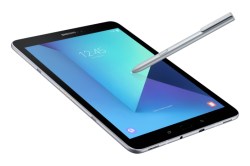
Before leaving Samsung, I used my employee discount one last time (in combination with a Thanksgiving sale) to get a Tab S3 to replace my old Tab S. I intended to experiment with using it to take notes and sketch out ideas at work to see how it felt compared to using an Apple Pencil with an iPad.
I’ve been using the Tab S3 for a bit over a week at work now, and so far I really like it. The Apple Pencil does feel a bit better in your hand (it’s slightly heftier, and I prefer the rounded pencil to the squarish S3 stylus), but the S3 stylus feels better when writing. It’s hard to describe exactly, but the stylus is slightly softer, so you get just a bit more friction than you get with the Pencil. It feels more like actually writing, while the Pencil feels more like sliding hard plastic on glass.
I also like that the stylus is passively sensed, so you don’t have to worry about charging it (and let’s face it, the Pencil’s charging solution just looks goofy). And despite being passively sensed, I haven’t noticed any difference in input latency with the stylus versus the Pencil.
From a software standpoint, I’m not thrilled with either first party solution. I like that Samsung Notes lets you use the button on the stylus to quickly erase, but I’m not thrilled with its approach to organizing notes (basically you get folders where each note-taking session as a file). Apple’s Notes is similarly limited organizationally, and since the Pencil has no button you get no quick erase toggle.
I experimented with Google’s Keep, but it really doesn’t support stylus input that well. Notes can have drawings, but each drawing is a separate full page document, so it gets really awkward if you’re taking lots of notes.
For now I’ve settled on using OneNote. You get notebooks, sections, and pages, each page can grow to be as big as you want. The only thing I don’t like about it is that there seems to be no way to assign the stylus button to erase; you have to manually toggle between inking and erasing. So far the improved organization beats the slightly more difficult erasing.
So far I’ve completely switched my note-taking to the S3; we’ll see if that trend continues or if I eventually get tired of having to make sure I remember to keep it sufficiently charged.
Friday the 17th was my last day at Samsung Research, and in the spirit of giving thanks I thought I’d mention a few things I’m thankful for from my time there.
First, I’m thankful for the opportunity for more direct hands-on work. I joined Samsung from IBM Research because I wanted to get closer to the product side: despite calling itself “Samsung Research”, most of the organization is focused on advanced product development rather than the publication-focused academic research that typically springs to mind for a research organization. During my time there, first with the UX Innovations Lab and then with the Think Tank Team, I got the chance to design and build multiple new user experiences, products, and services (although sadly I can’t talk about many of them).
Second, I’m thankful for the great people I got to work with. In academic research you typically work with just other researchers and the occasional developer, but at Samsung I got to work with people from all sorts of backgrounds: designers (visual, interaction, industrial), developers, engineers (electrical and mechanical), an architect, a physicist, and more. It was a lot of fun having all of those different perspectives and skills to bring to bear on projects.
Third, I’m thankful for the opportunity to learn new skills. I got a lot of experience building prototypes in Android, and I even had the chance to work more on web services (both the front-end interface and the back-end server). I had the opportunity to take Berkeley’s Engineering Leadership Professional Program (although to be honest I liked IBM’s Micro MBA course better). I improved as a project lead and manager as well, particularly how to lead a multidisciplinary team.
Fourth, I’m thankful for the opportunity to experience a different culture. While we always joked that IBM’s Almaden Research Center felt like an isolated outpost of IBM, that’s nothing compared to working in a small US subsidiary of a large Korean company. It was interesting to see the different approaches to and attitudes about work.
I wish my former colleagues all the best, and I look forward to seeing TTT’s hand in future Samsung offerings. As for me, I joined Google this past week, where I’ll start finding new things to be thankful for.
I admit it: I still use RSS readers. On iOS I’m a big fan of Reeder, but on Android I’m still using Press. Sadly Press has been abandoned for years now. It’s still functional, but it’s increasingly dated. I occasionally look at alternatives, but I haven’t found one I’ve really liked. Yes, I know Feedly is popular, but personally its design doesn’t appeal to me. So I’ve started to write my own RSS reader in my free time, using FeedWrangler as the backend service (an obvious choice, since it’s the service I use for Reeder).
We’ll see how it goes; my free time isn’t quite what it used to be. But it’s been fun so far, and I’m using it as a learning experience to try out technologies I haven’t had time to experiment with at work. Currently I’m using it to try out Android’s new Architecture Components; they should make managing the feed data and coordinating data nd UI updates a lot easier.
Speaking of this year’s Samsung Developer Conference, Samsung’s head of software and services InJong Rhee once again tried to motivate Bixby by touting it as a replacement for touch interfaces. This is not a new line; when Samsung launched Bixby it did so by claiming that voice was a significant improvement over hard-to-use touch interfaces.
I have two issues with this claim:
- Claiming that touch interfaces must be hard-to-use because people only use 15% of the functionality of their phone daily doesn’t pass the giggle test. People only use 15% of the functionality of their phone daily because that’s all they need. Give people Facebook, messages, email, and a browser and they’re good most days. That doesn’t mean all the other apps and capabilities are hard-to-use, it means that people only need them in more specialized circumstances. I only rarely use tethering, but that doesn’t mean it’s useless or difficult to use; it just means I don’t need it that often (and when I do need it, I’m really glad I have it available). There’s lots of research showing the advantage of direct manipulation interfaces. Ignoring it makes you seem like an idiot.
- Proposing to replace touch interfaces, which tend to be pretty good at revealing their functionality, with a voice interface that gives you no clue what it can do is even worse. If you really believe that people don’t use the full functionality of their phones because they can’t figure out how to do so, why is giving them a voice interface that doesn’t reveal it’s capabilities an improvement? News flash: it’s not. Voice interfaces are worse at communicating their capabilities, not better.
And it gets worse. Voice interfaces can be more efficient than touch interfaces, but they need to be designed differently. You don’t design a voice interface to be equivalent to a touch interface (with the notable exception of designing for accessibility). If the interfaces support equivalent interactions, a well-designed touch interface will be faster. You design a voice interface to provide high-level shortcuts. Think about it: would you rather tell your phone “send a message to my wife that I’m on my way”, or “open messages, start a new message to my wife, enter I’m on my way, send the message”? The former is a high-level shortcut, the latter is touch equivalent. But Samsung seems to think that voice assistants need to be touch-equivalent (or “complete”, as the company terms it).
I’m hoping Samsung makes improvements with Bixby 2.0, but first they need to establish a better motivating premise.
There’s been a lot of handwringing recently about how social networks might have influenced the outcome of the 2016 election. And don’t get me wrong: the companies involved should have to be clearer about who’s sponsoring posts and advertisements (particular when the sponsors are foreign powers). But much of the outrage strikes me as scape-goating. Facebook is not an objective news source, people; it’s a platform for people to share things. Don’t blame Facebook for not vetting whether a particular post is accurate, blame yourselves. If you want real news, subscribe to a quality publication like the New York Times or the Washington Post. You know, a news organization. If you can’t be bothered to get your news from a reputable news source, then don’t be surprised if you don’t get reputable news.
I write a lot. I take notes in meetings. I write down plans for my team for the next few days and the next few weeks. And I sketch out a lot of research ideas. Yes, I could just type all of those things on a keyboard, but I personally find that I’m both more creative and more thoughtful when writing.
I’ve always been intrigued by the potential of digital notetaking. I tried out the initial versions of the tablet PC when Microsoft first introduced it, but it was always just a little too clunky to replace handwritten notes. I’ve been using a Note 5 for a couple of years, and while it’s really useful for jotting quick notes and reminders (the ability to pull out the stylus and immediately start writing is killer), it’s too small to substitute for writing in a notebook (my current notebook of choice is the Baron Fig Confidant in Flagship size). When Apple released the Apple Pencil I was intrigued, but I doubted I’d get enough value from it to warrant the $100 price tag.
But then I got a pair of emails from United, one notifying me that my miles were going to expire soon and a second notifying me that I could use my miles to purchase Apple products. Since the miles would vanish anyway, I used the opportunity to order a Pencil.
My first experiment with using the Pencil was on Caltrain heading up to San Francisco for the Samsung Developer Conference, jotting some ideas for a project I was planning. The experience was good, but not great; my iPad seemed to occasionally have difficulty with palm rejection, so that it would start scrolling my note in the middle of writing. But the input was responsive and did a good job capturing my handwriting. And the Pencil definitely felt good in my hand.
Taking notes at the conference revealed that the issue I’d experience was not a general one, but was instead related to taking notes while in a moving vehicle. I’d been sitting on the lower level of the train, and while it was stable enough for writing the motion was apparently just enough to screw with Apple’s algorithm. When writing while stationary the palm rejection has been rock solid. Trying to write on the upper level of a train (on the return trip) was a total loss; the algorithm couldn’t figure out if I was trying to write or scroll. Of course, I should note that I have difficulty writing in a regular notebook on the upper level…
Latency on the pencil has generally been very good, although occasionally tracking will briefly hiccup. And once in awhile my iPad will just refuse to recognize the Pencil, but that’s fixable by briefly plugging the Pencil into the iPad (and yes, plugging the Pencil in to charge it is awkward, but it’s not a showstopper). I’m inclined to blame those issues on Bluetooth, but it’s worth noting that Wacom-based styluses don’t suffer from those problems.
In general I enjoy writing with the stylus; it’s probably the best digital note-taking experience I’ve had to date. And once I have the Pencil in my hand, I’ll use it to tap around on my iPad in lieu of touching; it feels good enough in your hand you don’t really want to put it down. But if I had to purchase it with cash I wouldn’t bother; I still prefer jotting notes in a notebook, and I’m not enough of an artist to spend much time drawing. So my search for a great digital note-taking experience continues.
In academic research, where I started my career, novelty trumps everything. First and foremost, papers must be novel; the kiss of death for a paper being considered by a program committee is for someone to argue that all of the ideas in the paper have been previously published elsewhere. After novelty, reviewers (and committees) look for neat: is the idea cool and interesting? Whether or not an idea is actually useful is rarely, if ever, been considered. In fact, I served on program committees where committe members argued that it was not the job of the committee to determine whether an idea was actually useful. And this is for HCI conferences, where you’d think that being useful for real people would be a primary consideration. In practice, not so much.
These days I live and work in Silicon Valley, where neat reigns triumphant. You’d think that for companies trying to actually make money that providing utility that people will pay for would be paramount. Sadly, too often Silicon Valley (and the tech press that covers it) assumes that neat means useful. Virtual reality is neat, there it must be the next big thing. What’s it good for? Who knows, but it’s neat, therefore it must be useful. Conversational agents are neat, therefore they must be useful. It’s neat to ask for the weather two Tuesdays ago at 2 PM near the Golden Gate Bridge. Is it useful? Did we mention how neat it is? And most recently, through-the-lens augmented reality on phones is neat, therefore it must be useful. You can measure things and see what furniture looks like in your home (which is about the limit of what Tango came up with after 3-4 years); sure that’s neat! Never mind that you probably don’t redecorate your house that often; it’s neat!
There are companies that do focus on useful. Apple, for example, tends to focus on it, even if it means that they’re not first to bring a particular technology to market. In fact, Apple tends to get dinged by pundits for not focusing enough on novel or neat. People will pay for useful, but it’s hard to generate lots of clicks for advertising revenue from it. Novel and neat make much better clickbait.
Useful is where I personally like to work. Useful means bringing real value to people, giving them their money’s worth. Useful isn’t antithetical to neat or novel; if you can get useful and neat or useful and novel, or all three, even better. But I’ve seen too many products or features make it to market because they’re neat and demo well and nobody bothered to think through (or care about) utility. And then they (unsurprisingly) get derided as gimmicky. Yes, our products do need to appeal to consumers. But if we want to build lasting relationships that keep them coming back, we need to providing value that lasts beyond the first use.
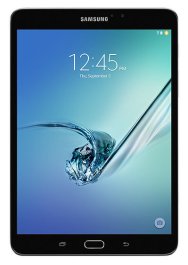 I’m a fan of small tablets. When Samsung released the first Galaxy Tab (way back when I was still at IBM Research), I thought the 7″ form factor was a strange choice: it wasn’t as portable as a phone, and yet it didn’t offer as much screen space as the recently released iPad. But we got one to experiment with at work, and I discovered I really liked the size. It was great for reading, with a combination of lightness and weight distribution that made it very easy to hold one-handed, while still offering full access to email, web browsing, etc. in a way that a Kindle e-reader (which has a similar form factor) does not.
When Amazon released the first Kindle Fire, I went ahead and pre-ordered one. While the Kindle Fire was slightly constrained in its functionality (let’s face it, the email and web browser were mediocre at best, and the thing was pretty pokey), reading Kindle books was my primary use case for a 7″ tablet (and it was inexpensive to boot). And I liked it; even now it’s still totally usable.
When I went to replace the Fire, I opted for a regular Android device for access to the Google Play Store. I’d recently joined Samsung, so I bought a Note 8.0 (the tablet, not the recently released phone). That device served me well for several years, but when I went to upgrade I decided to switch to something with more regular Android updates: the Nexus 7 (the 2013 version). Even though it was released the same year as the Note 8.0, Google had been providing updates to the latest and greatest Android version, so it served me well for another couple of years. But Google stopped providing updates with Marshmallow, so this year I went looking for another new small tablet.
Sadly, while I’m a big fan of the form factor, it seems the marketplace as a whole is not. Samsung released the Tab S3 this year only in the larger, 9.7″ form factor. Apple seems to be de-emphasizing small tablets as well; the iPad mini 4 is now over 2 years old, and there are rumors that Apple won’t release another one. In the end I opted for an 8″ Galaxy Tab S2. Samsung quietly bumped the internals in the summer of 2016, so it’s still relatively up-to-date. I like it: it’s fast, the screen looks great, and it’s very light. But it’s probably only got another year of OS updates (at most), and I’m not sure what I’ll do then.
So although small tablets might be getting squeezed by large tablets and increasingly large phones, I still think there’s value in the 7-8″ form factor. It’s great for reading, highly portable, and to mind the best choice for one-handed use. Have you ever tried to read in bed with a 9-10″ tablet? It’s ridiculous. And reading long-form content off an 18:9 aspect ratio phone? Ugh. Give me a small tablet any day. Every day. Please.
Silicon Valley is a great place to bike. It pretty much never rains between May and October, and even our “hot” days don’t tend to get that hot (the current heat wave being a notable exception). And even during our “rainy” season, it typically doesn’t rain that often. I’ve been biking to work almost every day (except when it rains or I need a car during the day for some reason) for a few years now.
In that time, I’ve noticed several particular species of Silicon Valley Bicyclist. By far the majority are pleasant, polite, and well-mannered, and I salute them heartily for their decency and contribution to society (reduced congestion, pollution, and demand on the healthcare system). However, there are sadly a few types that detract from the bike commuting experience. This Field Guide provides a brief description of these types so that you can recognize them when encountered.
The first is the class of bicyclists that I call the Self-Centered Self-Movers. This class is focused on just moving themselves along, oblivious to the rest of their world. They have their headphones jammed firmly in their ears, and they pay little (to no) attention to the world around them. I can understand wearing headphones while walking or running; I do it myself. You’re moving slower, you can stay to the side, and you have plenty of time to check your surroundings if you need to change direction. But bicycling? You’re moving faster, you generally can’t stick to the side, you sometimes need to change direction and speed quickly, and (when you’re on the road) you’re contending with drivers who aren’t always good about keeping an eye out for bicyclists. But the self-centered self-mover doesn’t care who they might injure or inconvenience. They are ensconced in their own little world and assume that everything will just work out ok.
There’s a (thankfully) small subset of the Self-Centered Self-Movers that also appear to be Self-Destructive. This subset goes so far as to not even bother to check behind them when changing lanes or turning. On trails that would just be rude, but I’ve seen people in this set exhibit this behavior on roads. Drivers in Silicon Valley are generally good around cyclists, but seriously: sooner or later just pulling out into the roadway and assuming that cars will give way for you (especially when you’re weaing headphones and can’t hear them approaching) will not end well.
At the other extreme from the self-movers, we have those cyclists that appear to be convinced they’re competing in the Tour de France. While commuting. These Competitive Racers zip along on expensive racing bikes while wearing racing outfits and appear to be massively irritated that cars and other cyclists are using the same pathways they are. No gap is too small to run, no traffic law too important to ignore. Particularly through their flouting of traffic laws (I’ve seen cyclists blast through 4-ways stops with lots of cars waiting), this class of cyclists both gives the rest of us a bad name and actively makes the road more dangerous for us, making a number of drivers feel like cyclists “have it coming”.
A related class of cyclists are those individuals whose competitive instincts are a little overdeveloped. While our Tour de Frace cyclists are arguably also overly competive, they’re at least consistently fast. What separates this other class of Transient Competitors is that they’re not fast unless they’re about to be passed. They might be idling along at a slow pace, but apparently having someone pass them runs the risk of deflating their self-worth. Should you start to overtake such a cyclist, they will suddenly exert strenous effort in an attempt to avoid such a horrendous fate. Not only will such efforts involve a sudden burst of speed, they will unfortunately also include taking risks that frequently imperil other people.
If the Competitive Racers and Transient Competitors exhibit Silicon Valley’s competitiveness, the Shortsighted Cyclists exhibit Silicon Valley’s emphasis on moving fast and (likely) breaking things. They seem to be unable to look further than the immediate cyclist in front of them. More often that I would like (which, admittedly, would be never), I see cyclists attempt to pass a cyclist in front them without realizing that there is one or more cyclists in front of that cyclist, that there is oncoming traffic in the other direction, or some upcoming obstacle. Failing to look ahead and think, the Shortsighted Cyclist realizes their mistake at the last second (if at all) and simply attempts to plow their way through, other people be damned. I’ve seen at least one accident caused by such cyclists, and more near misses than I can count on two hands.
The final class is relatively recent, a development of technological improvements. These are the Scooter Riders. In the last year or two e-bikes started to catch on Silicon Valley, jumpstarted I suspect by some well-meaning company. And overall e-bikes are a net positive: they get people at least some exercise, and they get people off the roads. But a regrettable subset of e-bike riders have apparently had their “empowerment” go their heads. They’re somehow convinced that since they’re faster than other cyclists, they’re also better riders than other cyclists. As a result, they see no problem with riding their e-bikes at scooter speeds while paying minimal attention to other cyclists and pedestrians. Their attitude appears to be that if those other individuals were worthy of their attention they too would be riding e-bikes. Since they are not, they are not. While I’m generally supportive of e-bikes on trails, this class of riders is increasingly making me believe that such bikes should have speed limiters.
While Silicon Valley cyclists will encounter all of these classes, they are thankfully still a fraction of our overall bicycling population. Most local cyclists are pleasant and polite, and I thank them for sharing the trails (and roads) with me.
 jeff pierce