
When we first moved to the Bay Area we decided to become fans of the Oakland Athletics, rather than the San Francisco Giants. There were several reasons for it:
- Giants fans take themselves way too seriously. The Giants have been relatively good over the last 15 years (winning a couple of World Series and all), and as a result Giants fans seem to expect the team to do well and get all bent of out shape when they don’t. By contrast, the A’s have been lousy for quite awhile, so no one minds that much if they lose (and are always pleasantly surprised when they win).
- A’s tickets are way cheaper than Giant’s tickets. That’s partly due to the relative track records of the teams and the relative quality of the stadiums (although the brutalism of the Coliseum does have a certain retro charm now), but I suspect it’s also due to the fact that San Francisco has a lot more money than Oakland. Cheap tickets made it easier to catch more games, and since we started going to games when our daughter was still young it didn’t make a lot of sense to pay more for tickets when she didn’t really care who was playing.
- It’s more fun to root for the underdog. This one’s just a personal preference; your mileage may vary.
As our daughter has gotten older we’ve stuck with the A’s. They’re still not that good, but the tickets are still pretty cheap, and they’re still fun to root for. The hardest part is accepting that you can’t get too attached to any particular player, because if they start doing well the A’s will trade them away.
This weekend we caught our first A’s game of the season, motivated in part by a desire to catch a game while Matt Chapman is still with the team (he’s been doing great at 3rd, although he’s in a bit of a batting slump at the moment). Plus they were playing the Orioles, who are even worse than the A’s this year, so they had a decent chance of winning. Overall the game was fun. It was a defensive battle: we reached the end of the 9th inning still tied 0-0, with the A’s having only gotten 2 hits and the Oriole’s 5. Extra baseball for our baseball dollar.
The 10th and 11th remained scoreless (the Oriole’s starting pitcher lasted the full 9 innings, and their first reliever was similarly killing us). But in the bottom of the 12th Jed Lowrie got a single, followed by Khris Davis (so stereotypically) knocking in a walk-off home run. It’s frankly surprising Davis is still with the team; the A’s would usually have traded him at least a year or two ago now. The team management has made some rumblings about stopping the trading of all of their good players, so maybe it’s a sign of change. Or maybe they’re just waiting for the right offer (my personal bet).
Regardless, the game was a fun way to spend a Saturday evening outside in nice weather. And hey, we got Black Panther bobbleheads too!

This week is the first long trip I’ve taken with the the Pixel 2 XL (after the short trip to Santa Cruz in February. Previously I’d always relied on my iPhone while traveling, since it always took better pictures than whatever Samsung phone I was using at the time. But time with the Pixel camera convinced me it was just as good as the iPhone camera, so this time I opted to bring the Pixel (it admittedly helped that I was traveling to a Google conference at a Google office).

The Pixel performed great on the trip. As usual I got some great shots (the picture shows the view from the 14th floor of Google’s NYC office). Battery life was awesome; I don’t think I ever used more then 33% of my battery on any day, even when not spending time at Google NYC ((I still regularly get 4 days at home, although that’s helped by the amount of time I spend with Wifi access). Project Fi coverage was fast and comprehensive. I discovered a new feature in Chrome on the trip: it automatically saved the page with my boarding pass for offline access, so that I didn’t have to worry about it being bumped out of the cache or spotty network access at airport security.
And of course it was invaluable having access to the usual suite of Google apps. What would I do if I couldn’t quickly check what the various cafes were serving in order to choose where to have breakfast?
So overall the Pixel performed spotlessly on the trip, and I’ll likely be bringing it as the default on future trips (particularly for International travel; the international data access on Project Fi is another big benefit).
This week I attended the 2nd annual UXE (UX Engineer) conference. The UXE role is still fairly new at Google; there are only around 250-300 of us overall. So the conference was a chance to meet other UXEs (although the Bay Area has the largest concentration, there are lots of folks in other areas) and learn a bit about what they’re doing. It was also a chance to see the Google NYC offices. I have to say they are quite nice. It helps that earthquakes aren’t really an issue on the East Coast, so they can (and have) build taller. But it also feels a bit like other locations try a bit harder to provide luster to the space; Mountain View may not try as hard since they have some default luster from being the primary location. I could definitely seeing myself exploring the possibility of working at the NYC offices a few years down the road.
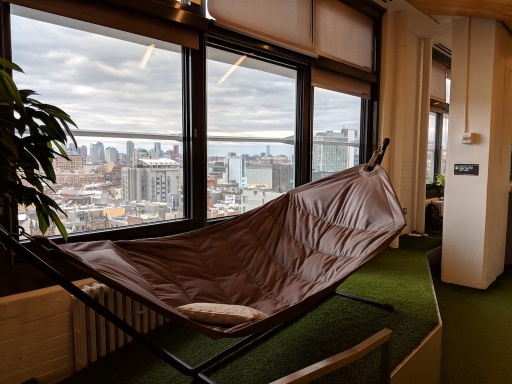
A view from the 11th floor of Google’s 111 8th Ave office.
Overall the conference was worthwhile. I met a bunch of new people and learned about some tools that might be useful in my own work. The most valuable part of the conference, however, might have been the one day workshop exploring how to grow the UXE role. Lots of good discussion and ideas bounced around.
I finished my first pass through Treasured Lands today, and I’ve already identified several new National Parks I’d like to visit (adding to the existing set of those I already knew I wanted to see). Looking through the book also reminded me how much I’ve enjoyed previous visits to National Parks, and in particularly how lucky we are in the West to have relatively easy access to some truly spectacular parks. One of the great things about living in the Bay Area is that some of my favorite parks are within a day’s drive.
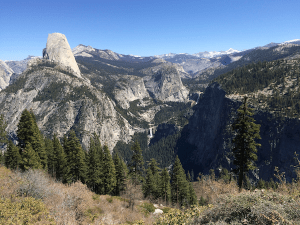
Yosemite is hands-down my favorite park. Most people just spend a day in the park, driving around the valley and making a few stops. But to really appreciate the park you need to stay for several days and go for some of the longer hikes. Walking along the valley in the morning or evening, hiking up to the top of Yosemite falls, hiking up the Mist Trail to Vernal (and then on to Nevada) Falls, and hiking down from Glacier Point to Illilouette Falls all provide amazing views of the valley and the surrounding mountains. And that’s just listing a few possibilities within the valley itself.
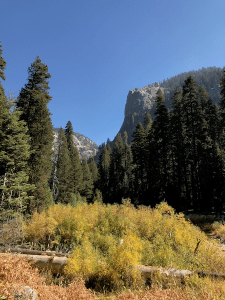
Sequoia National Park, farther south along the Sierra Nevadas, is impressive as well, although for slightly different reasons. While it also provides some amazing views of the surrounding mountains and the foothills leading to the Central Valley, the sequoia trees are more of the draw. We’ve only been to Sequoia once, but with just a few days we went on multiple hikes with amazing (and quite varied) views. Sequoia is proximate to Kings Canyon National Park, but we spent minimal time in that park on our trip. Our plan is that on our next visit we’ll concentrate on exploring that park.
Joshua Tree is also a favorite, but in a very different way. While both Yosemite and Sequoia are very lush and green (except when California is undergoing yet another drought), Joshua Tree is beautiful in a much more sparse, desolate way. The rock formations are beautiful in the morning and evening light, and the Joshua trees and other native vegetation stand out by virtue of the empty landscape. I suspect I wouldn’t find it nearly as enjoyable in the summer, but in the spring the park is amazing to visit.

We’ve also visited Pinnacles National Park, the Point Reyes National Seashore, and driven through Death Valley. One day I’d like to catch the spring wildflower blooms in Death Valley, but after looking through Treasured Lands I’m leaning toward visiting Lassen Volcanic National Park next (well, after Kings Canyon). The landscapes look amazing, and it draws fewer people than the more prominent parks in California.

Fridays are my favorite day at Google. Lots of Googlers work from home on Friday (to the extent that I’m occasionally tempted to send out a WFO email to counterbalance all the WFH emails: “I’ll be working from the office today and attending meetings in person. Available via all the usual means.”), so it’s nice and quiet, and it’s really easy to get into a groove and be really productive. Plus Google has great spaces to work outdoors, so with the warmer weather you can grab a table in the shade and enjoy the fresh air. Samsung Research had nice buildings, but they didn’t really have any good places to work outside (it didn’t help that their campus is right near 101 across from Moffett).
I also really enjoy the Talks at Google series; they aren’t kidding when they call it one of Google’s most beloved perks.Today Niall Ferguson gave a very enjoyable talk on his most recent book The Square and the Tower: Networks and Power, from the Freemasons to Facebook. Given the recent controversy around the influence of social networks on the 2016 election and subsequent developments, I found the talk interesting enough that I grabbed a copy of his book in order to read further.
Last week Kyle Van Houtan gave a talk on the new Ocean Memory Lab at the Monterey Bay Aquarium, discussing various approaches they’ve taken to better understand our oceans by coming up with new ways to fill in the gaps in historical data (for example, using isotope analysis of seabird feathers from museum collections to explore how seabird diets have changed over time, which provides clues as to how fish populations have changed over time).
And I’m still sad that I had to miss QT Luong’s talk on his book Treasured Lands two weeks ago (I had a schedule conflict with a meeting I needed to attend). Just looking at his book online was enough for me to buy up a copy: the pictures of the National Parks are gorgeous. I intend to use it as a sort of “shopping guide” to figure out which National Parks to visit next (Great Basin is a strong contender: it looks beautiful, and it’s one of the least visited parks). Luckily Google posts most of the talks to YouTube, and I fully intend to watch his talk once it’s online.
So today was a fun day. And that’s not even considering it as the gateway to the weekend.
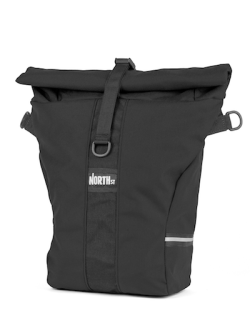
One of best things about living in the Bay Area is that I can bike to work almost every day. When I chose to move to Google from Samsung Research, the ability to keep biking was an important factor (in fact, my route is nearly the same: I head up the Stevens Creek trail and turn left instead of right). For the past few years I’ve been using a pannier instead of a backpack; particularly in the warm summer months, it’s nice not to have something trapping heat on your back. I initially chose the pannier I use, the Route Six from North St Bags, because I saw them at Renegade SF and their bags looked nice.
After several years of using them, I can definitively say that their bags not only look great, but they’re also great to use. They’re easy to load up, and you can customize what pockets the bag has when you order it. Plus the pockets velcro in, so you can change what’s in the bag based on your particular needs that day. You can also get a shoulder strap for the bag as well, which has been extremely useful now that I’m at Google. On days when it rains I take the Google Bus instead of driving, and it’s extremely convenient to just use the bag as a messenger bag on rainy days without needing to transfer everything to a different bag (and inevitably forget something). I was initially a little concerned about the bungee cord + hook on the back catching on my clothes, but I’ve had zero problems with it: when carried over your shoulder the hook falls (at least for me) away from my body. If you’re concerned about it, you can also get a pannier that converts to a backpack and features a removable cord + hook.
If you’re interested in switching to panniers or are looking for a pannier that’s also easy to carry off your bike, I strongly recommend the Route Route from North St.
I bike to work via the Stevens Creek Trail pretty much daily, except when it’s raining. The trail is used by lots of folks for commuting and exercise: walking, running, biking, even the odd rollerblader. It’s a sad commentary that even in Silicon Valley there are people that regularly (at least once a month) deface parts of the trail by spray painting on walls along the trail, or even on the trail itself. The city just as regularly paints over the graffiti, which in the end makes the defacement pointless: it’s going to be covered up before too long, so why do it? Every time I see a new defacement I think about the kind of person that’s willing to expend that pointless effort to reduce the quality of a public space for others. How either self-centered or antagonistic toward others do you have to be?
Living in Silicon Valley, I can’t help tie this back to the Internet. In the early days of the Internet there was a lot of (over-the-top) optimism about how the Internet would empower people, reduce inequality, increase transparency, and many other Good Things. And what did we get? Surveillance capitalism, conspiracy theories, and trolls. People on the Internet are still people. Is it really so surprising that just like some people would happily paint tags in a public space without regard to others, other people will happily insult and attack others online without regard to the impact of public discourse? The surprising thing is arguably how technology prognosticators assume that new technologies will somehow overcome human nature, despite all previous evidence to the contrary.
Every time I encounter a situation like this, where some individual takes an action that demonstrates how much they value themselves without regard to their impact on others, I think to myself that this is why we can’t have nice things. Because too many people in society are all about “me, me, me”, and damn the consequences. As a Gen-Xer, I only somewhat tongue-in-cheek blame the Baby Boomers. It’s the “Me Generation” carried to its logical conclusion.

I like Dan Seifert’s tagline for the S9 from his Verge review: “The Galaxy S9 is all of the good and all of the bad we’ve come to expect from Samsung”. That pretty much sums up my impressions; the phone fulfills my expectations from 5+ years of working at Samsung Research: good hardware, bad software, and still more gimmicks.
Hardware: starting with the Galaxy S6 Samsung really started nailing it with their industrial design, and they’ve stayed on top of their game since. Well, mostly. It still drives me nuts that they don’t symmetrically align the ports along the centerline of the edges. I don’t care if it makes the engineering easier; it just looks weird. And I’m super glad that Samsung didn’t go with a notch. I hate the notch. I’d much rather have the slim bezels of the S8 and S9 than the bloody notch. I don’t care if you get used to it; it’s still godawfully ugly.
Software: what a shock, Bixby is still a train wreck, and version 2.0 is still a work in progress. Version 1 was a serious blunder. Rather than spend the time to get it right, Samsung incurred serious engineering debt trying to rush it to market. And then, surprise, it turned out awful, and due to accrued debt had to be essentially trashed and rebuilt. And that’s not even mentioning the fact that it was largely based on a mistaken premise, that the way to build a voice assistant was to try to provide full equivalency with touch interaction. I can’t believe Google hired Injong Rhee after Samsung fired him for that debacle. On the bright side, he’s joining the Cloud organization, and they’ll hopefully keep him away from anything UX.
Gimmicks: from what I’ve seen, Samsung decides on features for new products based on what executives like in 2 minute demos. There’s no deeper discussion of pros and cons or considerations of what the experience might be like over a longer period of time. As a result, things that are neat and demo well go in, while more thoughtful ideas that take a little more explanation go nowhere. And thus you get a parade of gimmicks: neat for a quick demo, but generally useless in day-to-day life.
Over the last 6 or so years I’ve worked closely with designers on a variety of projects. A pattern that I’ve seen across designers and projects is that designers tend to think about the ideal case: how will it look if the images are all the same size and shape, if there are enough data items that the layout is perfectly symmetrical, if the machine learning (or other probabilistic approach) works exactly as desired. And I understand that approach: when you’re proposing a design, you want to show how good it could be.
But across those same projects I’ve noticed that I tend to think more about the edge cases: where will the design break down? What happens if you have thumbnails with different aspect ratios? What happens you only have enough data items to partially fill a column? What does the design look and feel when the probabilistic algorithm screws up, and how do user notice and recover?
I suspect that some of the difference in approaches is based on experience: I know a system won’t always meet the ideal, so I know you need to account for how it behaves in those other situations. But I suspect it’s also a matter of training (and possibly temperament). Writing software forces you to spend a lot of time thinking about edge cases: if you need to describe how a system works, you need to cover as many possible situations as possible. Design proposals for a system, by contrast, tend to focus on pitching that ideal case. And when you’re trying to pitch the best case, having to also lay out the edge cases really rains on your parade.
And there is often value in emphasizing the best case(s). Because developers have to think through the edge cases, they often attach more importance to them then they might otherwise merit. In code, edge cases often get equal weighting with the best case(s), but in the real world they may only occur in a small percentage of usage. The challenge, then, is to make sure to consider edge cases in the design, but to assign them importance based on their likelihood of occurrence. Of course, estimating that occurrence is often a challenge…
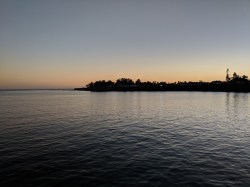
I used our trip to Santa Cruz as a test of the Pixel 2 XL camera. On previous vacations I’ve relied on my iPhone 7 Plus, since it yielded better photos than my Note 5. This time, though, I only brought the Pixel with me. Since I’d been to Santa Cruz before and will visit again, I figured it was a nice soft trial. Overall the camera performed really well: fast, responsive, and high-quality images. I think the low-light photos turned out a bit better than I’d typically get from my iPhone, but I also found myself missing the optical 2X zoom from the 2nd iPhone camera a few times as well. Bottom line: I’d be willing to rely on the Pixel camera on a “real” vacation, confident that I’d be able to take photos just as good as those I’d get on my iPhone.
 jeff pierce